OracleALL - 2011 SoulCollage(R) Facilitators' Conference from SoulCollage on Vimeo.
I am so often asked to describe what SoulCollage® is. The problem is that words don't fully express the magical process of discovery that takes place through making and speaking from the SoulCollage® cards. This video, created by SoulCollage® Facilitator, Sue Gelber, is a deep and meaningful discussion of SoulCollage® as well as a sharing of how the SoulCollage® community use their cards to grow and expand. It is almost an hour long, but well worth the time. You will find yourself looking at the world in a new way after viewing the video.
Sunday, October 28, 2012


Sunday, October 7, 2012
Singing from the Soul
 While exploring the archetype of the Healer, I learned that indigenous healers ask four questions of a person who is miserable and
disheartened. These questions are:
While exploring the archetype of the Healer, I learned that indigenous healers ask four questions of a person who is miserable and
disheartened. These questions are:When did you last dance?
When did you last sing?
When did you last listen to a story?
When did you last spend time in silence?
This made me think of how much I loved singing in my school choir, and reminded me that I very seldom sing out loud anymore. I sing in my head, but seldom let the words and sounds vibrate through my body. I want to change that, but I've become self-conscious of my voice.
So I did what I usually do when I want to explore something I would like to change in my life. I made a SoulCollage® card. And this is what the card said to me:
I am the one who raises my voice to the heavens by
the singing of sacred words. I am the
one whose voice sparkles with joy and praise. I am the one who has used the magic of sound since the beginning of
time. I am the one who knows the
energetic vibration of sound.
I give you the knowing that your voice contains
magic. It is a connection to the realm
of source. I give you the reminder that
opening your mouth and letting sound vibrate into the air around you will heal
your body.
I want you to sing and chant. I want you to remember how much you loved
singing as a child, how much you loved being part of a choir. There is no need to be self-conscious. You can sing when you are alone. Enjoy letting the vibrations of your voice
travel within your body.
It is time to start singing!
Thursday, August 23, 2012
The Healing Arts
Rachel Naomi Remen
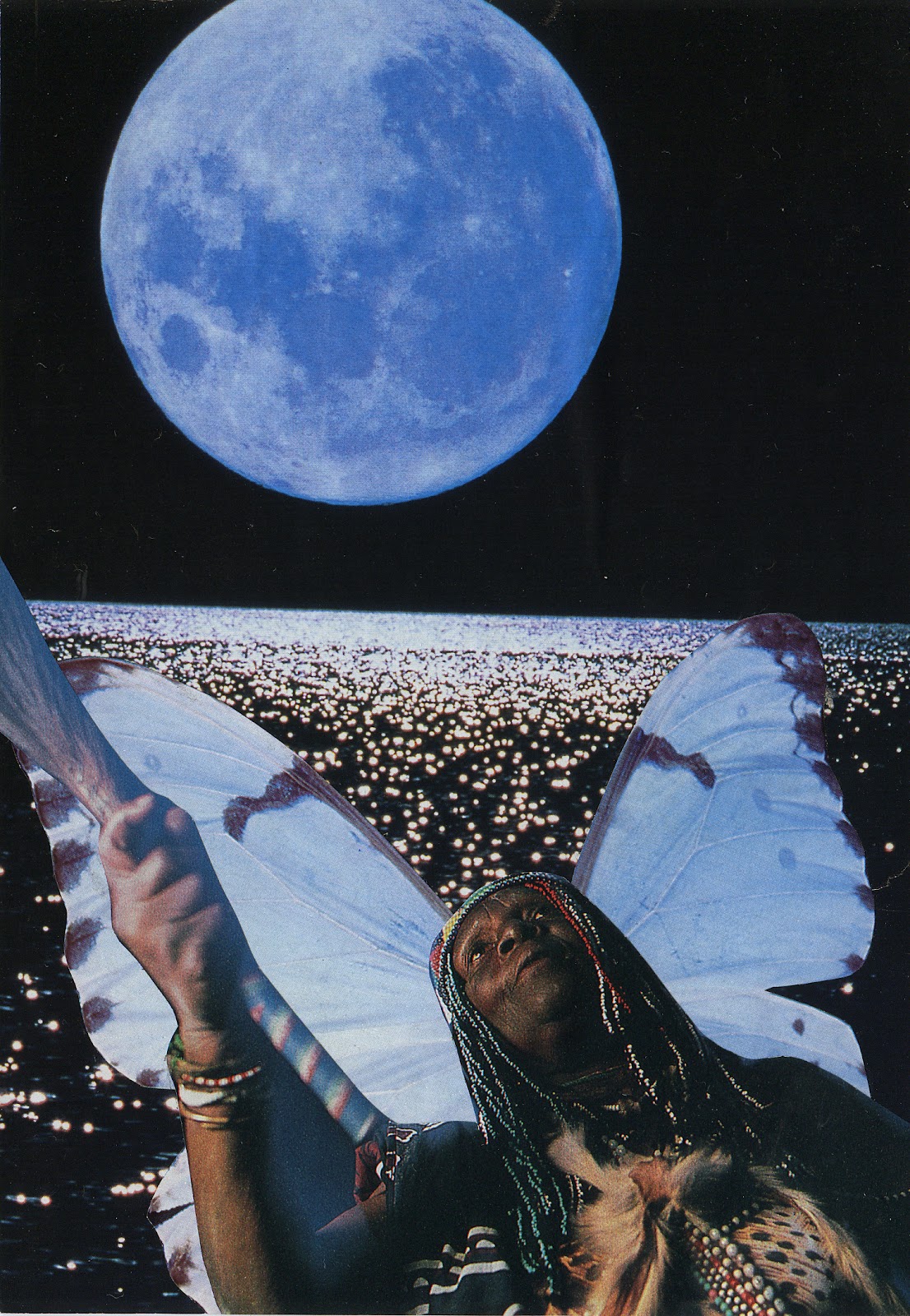
This week I focused on the archetype of the Healer in a class I taught, so when this quote found me this morning it really resonated within me. I have found that creating is a deeply healing process for me - one which allows me to connect to a sense of wonder and awe.
The image is my SoulCollage® Healer card. On it is a traditional African Healer or Shaman, and the card speaks to me of the connection between wholeness and wonder. Wonder in sun that rises each day, in the dew that forms on the grass, in the sparkles created by the moon, in our bodies - our hearts which beat, our eyes that see ... there is so much to appreciate. When I focus on just how magical and beautiful our world is, a sense of gratitude wells up within me, and that in itself is healing.
Sunday, July 15, 2012
Treasures of Imperfection
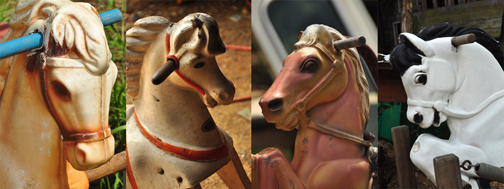
One of my favorite places to visit with my camera is Cline's Country Antiques in Mt. Pleasant, NC, affectionately known as "The Junk Farm". You can find all manner of unusual and interesting items here, many of them in stages of deterioration. It is the perfect place to photograph textures as rusty items and peeling paint abound. In fact the chair and the old tricycle on pages 122 and 123 of The Creative Photographer were photographed at Cline's Country Antiques.
Why photograph old things? I talk about my feelings about old things on page 122 of The Creative Photographer:
"Old things seem to hold the energy of all those who held them or beheld them. They have a story, a history. They were once useful or meaningful, and now they have been left to disintegrate. They can remind us of the inevitable journey of the human body. Keep your eyes open for these hidden treasures of imperfection. Visit an old junkyard and look at the junk in a new way. Think about the "life" it had before it was discarded. Photograph these things in such a way that you focus on the beauty in their degeneration."
And, if you don't have space to collect and store old things in your home, making photographs of them is a fun way to start a collection. I have a great collection of old chairs which I have made into a Tag Book, and after my last visit to Cline's Country Antiques, I now have enough photographs of rocking horses to start a new collection! What might you like to start a photograph collection of?
How about a show of hands? (Also found at Cline's!)

Friday, July 13, 2012
Summer and Slow Photography

Now I often find myself content to sit watching something with my camera on my lap waiting for the intuitive connection between my subject and myself. But I wasn't always able to allow myself to slow down and do this.
To get to this place of "slow photography" I suggest in the Exploration on page 134 of The Creative Photographer that you:
"put on music that speaks to you, perhaps something without words to distract you and loud enough to drown out any other noises. Then, take your camera and sit in front of an object you have decided you want to photograph. Take a photograph of this object every five minutes for an hour (a total of 12 images). In between, just look at the object, contemplate it, and listen to the music."
Doesn't that sound like a perfect way to spend a summer day?
In addition I suggest you "think about where the object came from, how many hands it passed through to get to you, whether it has been touched by the sun or the earth, by ocean, river or stream. Think about its symbolic meaning ..."
After all, as Jan Phillips so eloquently reminds us: "We photographers are poets in the language of symbols."
(And if you want to know what the Buddha is holding, it is a stone with the words "Embrace Love" stamped on the stone)
Wednesday, July 11, 2012
New Perspectives

This past weekend I took time out from our family reunion to look around my sister-in-law's beautiful garden in Virginia Beach and got closer to the color and shape and wonder that is present in flowers. I used my macro lens (which gave some interesting effects as it fogged up in the 104 degree weather). I became totally mesmerized at these miniature worlds within worlds.
On page 104 of The Creative Photographer I talk about the captivating essence of flowers in the Exploration called "Flower Power":
"There is so much beauty in flowers. Once you start photographing them, you can become enchanted by the perfect details, the color, and sometimes the minute life forms that live in them.
Get down to the level of the flower as if you were having a conversation with it. Get as close as your camera will allow. Look at the background. Is it simple and uncluttered? What color is it? Does the color enhance the flower or detract from it?
I love blurred backgrounds with images of flowers. Flowers are primarily about color and shape, and blurring the background - and even parts of the flower - allow us to focus on the color and form. If your camera has an Aperture Priority mode, this is a great time to use it. Set your camera to its smallest f/stop (which equates to its largest lens opening), such as f/2.8 or f/5.6."

Tuesday, May 29, 2012
Slow Returning
I didn't realize how much time it would take me to settle back into the daily routines of home after my trip to South Africa. I thought I'd arrive back on Wednesday and be back into doing again on Thursday. Perhaps I packed so much into the three weeks I was in South Africa that it has taken me six weeks to feel that I am home again.
And how do I choose which images to share from the hundreds of photographs I made? What is it I want to remember?
Or the weekend of training the first South African SoulCollage® Facilitators? Or my 30th wedding anniversary which my husband and I celebrated by having lunch at the hotel in Umhlanga Rocks where we had our wedding reception? Or tea with special friends we hadn't seen in years? There are so many magical experiences that I don't want to forget. And photographs can't always show what you saw because what we see is so influenced by our emotions and our memories. Sometimes you just have to breathe in the experience and hope that your body remembers the feelings.
And how do I choose which images to share from the hundreds of photographs I made? What is it I want to remember?
 |
| The weekend at the Buddhist Retreat Center teaching photography as meditation? |
 |
| Or the days with the special people of Woza Moya Project? |
 |
| Or the walks on the beach? |

 |
| Or the weekend in the Game Reserve with dear friends? |
Or the weekend of training the first South African SoulCollage® Facilitators? Or my 30th wedding anniversary which my husband and I celebrated by having lunch at the hotel in Umhlanga Rocks where we had our wedding reception? Or tea with special friends we hadn't seen in years? There are so many magical experiences that I don't want to forget. And photographs can't always show what you saw because what we see is so influenced by our emotions and our memories. Sometimes you just have to breathe in the experience and hope that your body remembers the feelings.
There is nothing like returning to a place that remains unchanged
to find the ways in which you yourself have altered.
Nelson Mandela
Subscribe to:
Posts (Atom)